Exploring the Joys of Urban Fishing: A Guide to City Angling

Exploring the Joys of Urban Fishing: A Guide to City Angling

Urban fishing is an increasingly popular way to connect with nature amidst the hustle and bustle of city life. Many cities are home to rivers, lakes, and coastal areas that offer excellent fishing opportunities, allowing anglers to enjoy their favorite pastime without venturing far from home. This article delves into the joys of urban fishing, providing tips, techniques, and recommended locations to make the most of your fishing experience in the city.

The Allure of Urban Fishing

Fishing in an urban setting combines the excitement of angling with the convenience of being close to home. The experience allows anglers to unwind and find tranquility in nature, even in the heart of a busy metropolis. Whether you’re a seasoned pro or a beginner, urban fishing offers a unique opportunity to explore local waterways and discover new species.

Urban fishing is accessible to many, requiring minimal equipment and often providing the chance to fish without a lengthy travel time. Many city parks and waterfront areas have designated fishing spots, making it easy to grab your rod and enjoy a quick fishing session after work or on weekends.

Understanding Your Environment

Before heading out, it’s crucial to familiarize yourself with the local environment. Each city has unique waterways, which can vary in terms of fish species, regulations, and accessibility. Researching your local fishing spots can enhance your experience significantly. Websites, forums, and local fishing clubs are valuable resources for gathering information about which species are prevalent in your area and what techniques work best.

Local Regulations

Always check local fishing regulations to ensure you are fishing legally. Many urban areas have specific rules regarding fishing licenses, size limits, and seasonal restrictions. Being informed not only keeps you compliant but also contributes to the conservation of local fish populations. Regulations may vary significantly, so knowing the details for each water body you plan to fish is essential.

Essential Gear for Urban Fishing

Urban fishing doesn’t require extensive gear. A simple setup can be highly effective. Here’s a list of essential gear that every urban angler should consider:
– Rod and Reel: A lightweight spinning rod is versatile and easy to handle in crowded areas.
– Tackle Box: Keep your tackle organized with a small tackle box containing various lures, hooks, and weights.
– Bait: Depending on the species you are targeting, live bait like worms or artificial lures can be effective.
– Fishing Line: Choose a durable fishing line suitable for the species you’re pursuing.
– Fishing License: Ensure you have the necessary licenses or permits to fish in your area.

Techniques for Successful Urban Fishing

Urban fishing can present unique challenges, such as navigating crowded spaces and dealing with pollution. However, with the right techniques, you can maximize your chances of a successful catch.

Casting Techniques

Practice different casting techniques to improve your accuracy. In urban areas, you may need to cast around obstacles such as docks, boats, or overhanging trees. A sidearm cast can be particularly useful in tight spaces, allowing you to place your bait precisely where fish are likely to be hiding.

Timing Your Fishing

Timing is crucial in urban fishing. Many fish species are more active during early morning or late evening hours. Additionally, understanding tidal patterns can help you determine the best times to fish in coastal urban areas. Observing local conditions can also lead to better results; for instance, fishing after a rainstorm can increase fish activity as they move to feed.

Adapting to Water Conditions

Urban waterways can vary in clarity and flow, influenced by factors like weather and urban runoff. Pay attention to water conditions and adjust your techniques accordingly. In murky water, use brighter lures or stronger scents to attract fish. Conversely, in clear water, natural-looking lures may be more effective.

Best Urban Fishing Locations

Many cities have hidden gems for fishing. Here are a few types of locations to explore:

Parks and Lakes

Many urban parks feature lakes that are stocked with fish, making them ideal for fishing. These locations often have facilities like benches and picnic areas, making them perfect for a day out with family or friends. Popular species in these waters may include bass, trout, and panfish.

Rivers and Streams

Rivers running through urban areas can be excellent fishing spots. Look for areas where the water slows down, such as pools or eddies, as fish often gather in these spots. River fishing can also provide opportunities to catch species like catfish and salmon, depending on your location.

Coastal Areas

If you live near the coast, take advantage of urban beaches and piers. These areas can offer fantastic fishing opportunities for saltwater species. Shore fishing, pier fishing, or even launching a kayak can open up a variety of fishing experiences in urban coastal environments.

Connecting with the Community

One of the joys of urban fishing is the sense of community among local anglers. Connecting with fellow fishing enthusiasts can enhance your experience and provide valuable insights. Joining local fishing clubs or participating in community events can help you meet like-minded individuals and learn about the best fishing spots and techniques.

Many cities also host fishing derbies and tournaments, providing fun opportunities to compete and connect with others. Participating in these events can foster a sense of camaraderie while promoting sustainable fishing practices in your community.

The Importance of Conservation

As urban fishing grows in popularity, it’s crucial to advocate for conservation efforts in local waterways. Pollution, habitat destruction, and overfishing can threaten aquatic ecosystems. Anglers play an essential role in preserving these environments. Engage in local clean-up events, promote catch and release practices, and educate others about responsible fishing.

By working together, the fishing community can help protect and enhance urban waterways for future generations. Advocating for policies that support conservation can lead to healthier ecosystems and more enjoyable fishing experiences.

Conclusion

Urban fishing offers a unique way to connect with nature and enjoy the thrill of angling without straying far from home. With the right gear, techniques, and knowledge, anglers can find success in city environments while contributing to local conservation efforts. Exploring local parks, rivers, and coastal areas can reveal hidden fishing gems that provide both relaxation and excitement.

As you embark on your urban fishing adventures, remember to respect local regulations, practice sustainable fishing techniques, and connect with the fishing community. By doing so, you’ll enhance your fishing experience and help preserve the waterways that make urban fishing so special. So grab your rod, head to your local fishing spot, and embrace the joys of urban fishing!
Cycling Through Time: A Journey of Styles and Innovations

Cycling Through Time: A Journey of Styles and Innovations

Cycling has long been a favored mode of transportation, recreation, and sport, evolving significantly over the years. From its humble beginnings to the diverse array of styles we see today, cycling continues to inspire and connect people across the globe. This article delves into the history of cycling, the innovations that have shaped its disciplines, and the vibrant communities that flourish within this multifaceted sport.

A Brief History of Cycling
The origins of cycling can be traced back to the early 19th century with the invention of the draisine, also known as the running machine. This early two-wheeled device, created by Karl Drais in 1817, set the stage for the development of bicycles as we know them today. The first true bicycle, the penny-farthing, emerged in the 1870s, characterized by its large front wheel and smaller rear wheel. While it was a remarkable feat of engineering, the penny-farthing’s design posed challenges, particularly in terms of safety.

As cycling gained popularity, innovations continued to emerge. The introduction of the safety bicycle in the 1880s revolutionized the sport, featuring equal-sized wheels and a chain drive that made it easier and safer to ride. This design paved the way for the modern bicycle, allowing more people to embrace cycling as both a recreational activity and a means of transportation.

The Rise of Road Cycling
As bicycles became more accessible, road cycling began to flourish. The first organized road race took place in Paris-Roubaix in 1896, marking the beginning of competitive cycling as we know it. Road cycling encompasses various styles, including Road Racing and Endurance Riding. Road racing involves high-speed competitions on paved roads, with events ranging from short criteriums to prestigious stage races like the Tour de France. These events showcase the physical prowess and strategic skills of cyclists, creating a thrilling spectacle for both participants and spectators.

Endurance riding, on the other hand, emphasizes long-distance journeys. Randonneuring and audax events invite cyclists to test their limits, covering distances often exceeding 200 kilometers in a single ride. These endurance events foster a sense of camaraderie among participants, who share stories of their adventures and encourage each other to achieve personal bests. The joy of endurance riding lies not only in the physical challenge but also in the stunning landscapes encountered along the way.

Exploring Mountain Biking
As cycling diversified, mountain biking emerged in the late 20th century, offering a thrilling way to explore rugged terrains. Mountain biking is divided into several styles, including Cross-Country (XC), Downhill (DH), and Enduro. Cross-country riding emphasizes endurance and technical skills, as cyclists navigate varying terrains, from smooth paths to rocky trails. This style of riding often attracts outdoor enthusiasts who relish the challenge of climbing and descending while immersed in nature.

Downhill mountain biking focuses on speed and excitement. Riders tackle steep trails, navigating jumps and obstacles that require expert control and quick reflexes. The adrenaline rush that comes from flying down a hill is exhilarating, drawing in thrill-seekers and adventure lovers alike. Enduro mountain biking combines elements of cross-country and downhill riding, featuring timed descents interspersed with untimed climbs. This discipline allows riders to enjoy the best of both worlds, fostering a strong sense of community as they support each other through the challenges.

BMX: Speed, Style, and Stunts
BMX (Bicycle Motocross) brings a unique flair to cycling, emphasizing speed and creativity. This discipline includes both racing and freestyle categories. BMX racing involves navigating purpose-built dirt tracks filled with jumps and turns. Races are typically short and intense, requiring quick bursts of speed and agility. The camaraderie within the BMX community is evident as riders share tips and celebrate each other’s achievements.

Freestyle BMX focuses on performing tricks and stunts, showcasing creativity and individual style. Riders demonstrate their skills on ramps, in skateparks, or on urban obstacles. The welcoming nature of the freestyle community encourages both beginners and seasoned riders to come together, share their passion, and learn from one another.

The Allure of Cyclocross
Cyclocross racing offers a distinctive blend of cycling disciplines, characterized by its diverse terrains and challenging obstacles. Races often take place in fall and winter, featuring a mix of grass, dirt, and mud, where cyclists must dismount and carry their bikes over barriers. This discipline tests both physical strength and adaptability, making it a unique challenge that draws in riders and spectators alike. The sense of community in cyclocross is palpable, as participants cheer each other on and celebrate the spirit of competition.

Track Cycling: Speed and Precision
Track cycling captivates audiences with its high-speed races on banked oval tracks, known as velodromes. Cyclists compete on fixed-gear bikes in various events, including sprints, pursuits, and team races. The excitement and strategy involved in track cycling create an electrifying atmosphere, showcasing the skills and teamwork of the athletes. The friendships formed among competitors add to the overall experience, as they share their love for the sport and support each other in their pursuits.

Bike Touring: Adventure Awaits
For those with a spirit of adventure, bike touring offers an incredible opportunity to explore new landscapes and cultures. Cyclists embark on long-distance journeys, often covering thousands of miles over weeks or months. These adventures can be self-supported or assisted, allowing riders to immerse themselves in diverse environments. The freedom of bike touring creates unforgettable memories as cyclists encounter stunning scenery and connect with local communities. The friendships formed during these journeys often last a lifetime, as riders bond over shared experiences and challenges.

Recumbent Cycling: Comfort Meets Efficiency
Recumbent biking presents a unique approach for those seeking comfort and reduced strain during their rides. Riders sit in a reclined position, which can be particularly beneficial for individuals with physical limitations or those who prefer a more relaxed cycling experience. Recumbent bikes often allow for efficient pedaling, making them suitable for long rides without discomfort. This style of cycling promotes inclusivity, welcoming a diverse range of participants to the cycling community.

The Rise of Electric Biking
The emergence of electric-assist biking, or e-bikes, has transformed the cycling landscape, making it more accessible to individuals of all ages and abilities. E-bikes are equipped with electric motors that provide assistance, allowing cyclists to tackle challenging climbs and longer distances with ease. This technology encourages individuals who may have felt intimidated by traditional cycling to embrace the sport. E-bikes foster inclusivity, promoting the enjoyment of biking for everyone and expanding the cycling community.

Indoor Cycling: Year-Round Fitness
Indoor cycling has gained popularity as a convenient way to stay active, regardless of weather conditions. Spin classes and stationary cycling sessions provide high-intensity workouts led by enthusiastic instructors. These classes often incorporate motivating music and structured intervals, creating an engaging environment that encourages participants to push their limits. Indoor cycling serves as an excellent cross-training option for outdoor cyclists and provides a welcoming space for newcomers to experience the joys of cycling.

Bike Polo: A Fun Team Sport
Finally, bike polo adds a lively twist to traditional sports by incorporating bicycles instead of horses. Played on grass or hard courts, bike polo requires players to demonstrate coordination, strategy, and teamwork. The inclusive nature of bike polo fosters a sense of community, as participants come together to learn and improve their skills while enjoying friendly competition. This sport promotes social interaction and provides a fun outlet for exercise, further enriching the cycling culture.

Conclusion
Cycling has come a long way since its inception, evolving into a diverse and vibrant sport that brings people together. From the competitive edge of road racing to the adventurous spirit of mountain biking and the creativity of BMX, each discipline offers unique experiences and communities. As cycling continues to grow and adapt, it remains a source of joy, connection, and adventure for people around the world. Embracing the variety of cycling styles allows individuals to find their niche, explore their passions, and foster lasting friendships, all while enjoying the simple pleasure of riding a bike.

Diving into Adventure: A Comprehensive Guide to the Many Types of Diving

Diving into Adventure: A Comprehensive Guide to the Many Types of Diving

Diving opens the door to a world that few will ever fully understand—an entire ecosystem that thrives beneath the surface of the ocean, rivers, and lakes. Whether you’re drawn to the serenity of shallow reefs, the thrill of exploring deep shipwrecks, or the challenge of professional underwater work, there’s a diving discipline suited to every interest. In this article, we’ll explore the many different types of diving, offering insights into what makes each style distinct and how to get started on your own underwater journey.

Scuba Diving: The Gateway to Underwater Exploration

For many, scuba diving serves as the entry point into the world of underwater adventure. The word “scuba” stands for Self-Contained Underwater Breathing Apparatus, a system that allows divers to breathe underwater using tanks of compressed air. Scuba diving enables individuals to explore oceans, lakes, and even rivers at depths ranging from just a few meters to more than 40 meters (130 feet).

One of the primary appeals of scuba diving is its accessibility. With the right training and certification, almost anyone can become a diver. Recreational scuba diving is popular in destinations with clear, warm waters and abundant marine life, such as the Great Barrier Reef in Australia, the Galápagos Islands off the coast of Ecuador, and the Red Sea near Egypt. These regions offer some of the most vibrant ecosystems on Earth, teeming with fish, rays, sharks, and even sea turtles.

To begin scuba diving, individuals typically need to take a certification course from a recognized diving organization, such as PADI or SSI. These courses cover the fundamentals of dive theory, equipment use, underwater communication, and emergency procedures. Once certified, divers can start with shallow dives and gradually increase their depth and experience as they grow more comfortable with the underwater environment.

Scuba diving offers a peaceful, immersive experience, where divers can marvel at the beauty of underwater landscapes, explore ancient shipwrecks, or simply float among schools of fish. Many divers choose to explore coral reefs, which support some of the most diverse ecosystems on the planet.

Freediving: Harnessing the Power of Breath

For those who want to dive without the encumbrance of heavy equipment, freediving offers a minimalist and deeply rewarding experience. In freediving, divers rely solely on their breath-holding ability to explore the underwater world. Freedivers use a mask, snorkel, and fins, and sometimes a wetsuit, to increase their mobility and comfort in the water.

Freediving is one of the most natural forms of diving, allowing individuals to move freely and effortlessly beneath the surface. Divers rely on breath-hold diving techniques and must master control over their breath and body to descend to deeper depths. Unlike scuba diving, there is no equipment to support breathing, so freedivers are completely dependent on their lungs and the oxygen they’ve inhaled before diving.

There are different disciplines within freediving, including static apnea, where divers hold their breath while remaining still underwater, and dynamic apnea, where divers swim underwater on a single breath. In both cases, the goal is to push the body’s limits, both mentally and physically. Competitive freediving takes this a step further, with divers diving to great depths or swimming long distances on a single breath. World-class freedivers can descend to depths exceeding 100 meters (330 feet) or swim underwater for more than 200 meters (656 feet) in a single breath.

Freediving requires a unique combination of relaxation, concentration, and breath control. It’s an activity that can be practiced in shallow coastal waters or open ocean, with many divers using freediving to observe marine life up close. The discipline offers an unparalleled sense of freedom, as divers move with ease and minimal impact on the environment.

Technical Diving: Pushing the Limits of Exploration

While recreational scuba diving is accessible to most, technical diving is reserved for those who wish to go deeper, stay underwater longer, or explore more challenging environments, such as caves and wrecks. Technical diving involves specialized equipment, training, and gas mixtures to enable divers to safely explore depths beyond the limits of recreational diving.

Technical diving includes disciplines such as cave diving, wreck diving, and decompression diving. Divers use advanced equipment, such as rebreathers (which recycle exhaled air), multiple gas tanks, and sophisticated dive computers to help manage the complex demands of deep dives. Technical divers also use special gas mixtures, such as nitrox (oxygen-enriched air) and trimix (a blend of oxygen, nitrogen, and helium), to reduce the risks associated with deep dives, such as nitrogen narcosis and oxygen toxicity.

Cave diving is one of the most challenging and dangerous forms of technical diving. Cave systems, often located in remote areas, are flooded with water, and exploring them requires expert knowledge of underwater navigation, gas management, and emergency protocols. The confined, often dark spaces make cave diving particularly risky, so divers must have extensive training and experience before attempting these dives.

Wreck diving is another exciting aspect of technical diving. Shipwrecks, downed aircraft, and sunken military vessels offer a fascinating glimpse into history. These dives typically take place at greater depths and in environments where visibility can be limited. Wrecks often serve as artificial reefs, attracting a variety of marine species, which makes them popular sites for both historical exploration and underwater photography.

Commercial Diving: Diving for Industry and Research

While recreational and technical divers focus on exploration and leisure, commercial diving is a professional field that supports various industries. Commercial divers perform tasks such as underwater construction, ship maintenance, underwater welding, and even scientific research. This type of diving is much more technical and demanding than recreational diving, and it requires rigorous training and specialized equipment.

Commercial divers often work in offshore environments, on construction sites, or in search and recovery operations. They may be involved in inspecting underwater pipelines, conducting marine surveys, or repairing offshore oil rigs. Because commercial diving often takes place in more hazardous conditions, divers use more heavy-duty equipment, such as hard hats, umbilical cords, and diving bells. These devices provide divers with life support, oxygen, and communication capabilities while working at greater depths or in challenging underwater conditions.

The field of commercial diving is diverse, offering a wide range of job opportunities in industries like construction, salvage, marine research, and environmental monitoring. Professional divers may also work on projects related to the maintenance of underwater infrastructure, such as bridges, dams, and oil rigs.

Snorkeling: A Beginner’s Dive into the Ocean

While not strictly considered a form of diving, snorkeling provides a simple, accessible way for individuals to experience the underwater world without the need for specialized training or equipment. In snorkeling, participants use a mask, snorkel, and fins to float on the surface of the water, observing the underwater ecosystem from above.

Snorkeling is ideal for beginners or casual explorers, as it requires minimal equipment and is typically done in shallow waters. Many popular snorkeling destinations, such as the Maldives, Hawaii, and the Caribbean, feature crystal-clear waters and abundant marine life, making them perfect for those looking to observe vibrant fish, coral reefs, and other marine creatures.

Though snorkeling is a low-risk activity, safety remains a priority. Snorkelers should always practice good habits, such as staying close to the shore, using proper equipment, and avoiding strong currents.

Underwater Photography: Capturing the Beauty Below

For divers looking to document their underwater experiences, underwater photography offers the perfect way to preserve memories of their dives. With the right equipment and knowledge, divers can capture stunning images of marine life, coral formations, and underwater landscapes. Modern waterproof cameras, housing units, and lighting systems allow for high-quality images, even in challenging conditions like low light or murky waters.

Underwater photographers often work in professional settings, documenting marine ecosystems for conservation efforts, documentaries, or commercial purposes. Others engage in recreational underwater photography, capturing the beauty of the ocean for personal enjoyment and sharing with friends and the diving community.

Conclusion: Discovering the Wonders of the Underwater World

Diving is a unique way to explore the mysteries of the oceans, rivers, and lakes. From the peaceful, shallow reefs explored in scuba diving to the adrenaline-pumping depths of technical and wreck diving, the underwater world offers something for everyone. Whether you’re an adventurer seeking new experiences or a professional diver working in challenging conditions, diving provides a window into one of the most fascinating and unexplored environments on Earth.

With so many different types of diving to explore, it’s essential to understand the skills, equipment, and training required for each discipline. The underwater world is waiting to be discovered—so take the plunge and start your diving adventure today.

Exploring the Art of Freediving: A Journey Into the Depths of the Ocean

Exploring the Art of Freediving: A Journey Into the Depths of the Ocean

Freediving, also known as apnea diving, is one of the purest forms of underwater exploration. Unlike scuba diving, which requires tanks of compressed air, freedivers rely solely on their breath to explore the depths of the ocean. The ability to dive deep without external assistance connects freedivers to the underwater world in a way that few other activities can. Freediving offers a blend of physical challenge, mental discipline, and a profound connection to nature.

What is Freediving?

Freediving is the practice of diving underwater while holding one’s breath, without the aid of breathing apparatus such as tanks or regulators. It is an activity that has been practiced for centuries, dating back to ancient cultures that used breath-holding techniques for fishing, pearl diving, and underwater exploration.

Freediving encompasses several different disciplines, each requiring a unique set of skills and techniques. These include depth diving (reaching the greatest possible depth), static apnea (holding one’s breath while stationary underwater), and dynamic apnea (swimming underwater for distance). Freediving can be both recreational and competitive, with athletes pushing the boundaries of what the human body can achieve underwater.

The Philosophy and Mindset Behind Freediving

At its core, freediving is not just about physical strength or lung capacity; it is a deeply meditative practice that emphasizes calmness, mental control, and mindfulness. Freedivers often describe the experience of diving as a form of escape, a way to disconnect from the stresses of daily life and reconnect with the ocean.

Unlike other extreme sports, freediving is about finding balance within oneself. Freedivers must learn to manage their physical reactions, stay calm, and focus on the present moment. Breath control is essential, and divers spend significant time training their bodies and minds to become more efficient at holding their breath for longer periods and diving deeper.

The Benefits of Freediving

Freediving offers a wide range of physical, mental, and emotional benefits. Many freedivers report a sense of tranquility and peace that they find difficult to replicate in other activities.

Physical Benefits

Freediving is an excellent full-body workout that targets the respiratory system, lungs, and core muscles. The body is forced to adapt to the challenges of holding the breath while diving, leading to improved lung capacity, better circulation, and increased stamina. Over time, freedivers develop increased tolerance to carbon dioxide, which enhances their ability to stay submerged for extended periods.

Freedivers also enjoy a sense of weightlessness in the water, which helps alleviate stress on the joints and muscles. This makes it an ideal low-impact activity that can be gentle on the body while providing a full-body workout.

Mental Benefits

The mental benefits of freediving are just as profound as the physical ones. Freedivers must practice focus, discipline, and relaxation to perform at their best. Holding one’s breath for long periods requires a level of mental control that can be both challenging and rewarding.

Freediving encourages mindfulness, as divers must remain in the present moment, tuning in to their body’s sensations and the sounds of the ocean. Many freedivers report a sense of calm and clarity that accompanies the deep focus required during a dive.

Emotional Benefits

The emotional benefits of freediving are often cited as transformative. The feeling of immersion in the ocean, combined with the physical challenge and mental clarity, allows freedivers to experience a deep sense of connection to nature and the world around them.

This connection can lead to a profound sense of peace, gratitude, and appreciation for the natural world. Freedivers often speak of the underwater environment as a source of solace and inspiration, and many return to the water time and again to recharge emotionally and spiritually.

Freediving Techniques and Training

While freediving is an accessible activity for beginners, it also requires practice, skill, and knowledge to dive safely and effectively. Training in freediving involves both physical preparation and mental conditioning. Below are some key techniques and areas of focus for freedivers:

Breath Control

The foundation of freediving is breath control. Freedivers must learn how to breathe deeply and efficiently to maximize the amount of oxygen available to their bodies. Proper breathing techniques can help divers stay calm and reduce their heart rate, enabling them to hold their breath for longer periods.

Breathing exercises such as diaphragmatic breathing, box breathing, and pursed-lip breathing are commonly practiced by freedivers to increase lung capacity and improve oxygen efficiency.

Relaxation and Mental Focus

Relaxation is a vital component of freediving. The more relaxed a diver is, the longer they can hold their breath and the deeper they can go. Freedivers often practice meditation and visualization techniques to improve their ability to focus, control anxiety, and stay calm under pressure.

Deep relaxation also helps divers conserve energy, reduce oxygen consumption, and prevent hyperventilation, which can be dangerous during a dive.

Equalization

As a diver descends into the water, the pressure on their body increases, which can cause discomfort in the ears and sinuses. Equalization is the technique used to balance the pressure in these areas by releasing air from the lungs or sinuses.

Freedivers must master equalization techniques such as the Valsalva maneuver or the Frenzel maneuver to prevent discomfort and injury while diving. This is particularly important for deep dives, where pressure changes are more significant.

Safety and Buddy System

Safety is paramount in freediving. As an activity that involves holding one’s breath for extended periods, there is always a risk of shallow water blackout or hypoxia, a condition caused by insufficient oxygen levels in the body. Because of this, freedivers must always practice the buddy system: diving with a partner who is trained to assist in case of an emergency.

Divers should also stay within their limits and progressively increase their depth and breath-hold times as they gain experience. It is important to never dive alone, and it is highly recommended that new divers take a course with a certified freediving instructor.

Competitive Freediving

In addition to recreational freediving, there is also a competitive aspect to the sport. Competitive freediving involves pushing the limits of breath-hold and depth, with athletes striving to reach greater depths or swim further distances on a single breath.

Competitive freediving has several disciplines, including:

– Static Apnea: Holding one’s breath while floating on the surface of the water, typically for as long as possible.
– Dynamic Apnea: Swimming horizontally underwater on a single breath, often in a pool, to cover the greatest possible distance.
– Constant Weight: Diving to a predetermined depth and returning to the surface, using only the diver’s fins and body strength (no pulling on the rope).
– Free Immersion: Similar to constant weight but without fins; the diver pulls themselves along the rope to reach depth.

Competitive freedivers often train for years to improve their performance and achieve personal or world records. The sport requires incredible physical endurance, mental fortitude, and a deep understanding of the body’s limitations.

Conclusion

Freediving is a powerful and transformative activity that offers unparalleled opportunities to explore the underwater world. It combines physical discipline, mental clarity, and a deep sense of connection to nature, making it one of the most fulfilling ways to experience the ocean.

Whether practiced recreationally or competitively, freediving is a journey of self-discovery, where divers learn to push their limits, stay calm under pressure, and experience the ocean in its most raw and beautiful form. With its growing popularity around the world, freediving is sure to continue captivating the hearts and minds of adventurers for years to come.

Exploring the Thrills of Freestyle Snowboarding: Tricks, Terrain, and Techniques

Exploring the Thrills of Freestyle Snowboarding: Tricks, Terrain, and Techniques

Freestyle snowboarding is a vibrant and dynamic discipline that emphasizes creativity, skill, and expression on the slopes. Whether you’re spinning off jumps, grinding rails, or mastering the halfpipe, freestyle riding offers endless opportunities for self-expression and thrill-seeking. In this article, we will explore the fundamentals of freestyle snowboarding, essential tricks, key techniques, and tips to elevate your performance in the terrain park.

Understanding Freestyle Snowboarding

Freestyle snowboarding focuses on performing tricks and maneuvers, often in specially designed terrain parks. These parks feature various obstacles, including jumps, rails, boxes, and halfpipes, allowing riders to showcase their skills and creativity. Unlike other disciplines, freestyle snowboarding encourages riders to express their unique style through innovative tricks and combinations.

Essential Equipment for Freestyle Snowboarding

To excel in freestyle snowboarding, having the right equipment is crucial. Here are the key components you’ll need:

Snowboard: Freestyle boards are typically shorter and more flexible than all-mountain or freeride boards. This design allows for easier maneuverability and better control during tricks. When selecting a board, look for one that suits your style and skill level, ensuring it can handle the features you’ll encounter in the terrain park.

Bindings: Freestyle bindings should provide a balance of support and flexibility. Many riders prefer medium-flex bindings, which allow for freedom of movement while still offering enough support for landings and transitions.

Boots: Choose freestyle boots that are comfortable and provide good ankle support. A softer flex can be beneficial for absorbing impacts during landings and allowing for greater mobility when performing tricks.

Key Techniques for Freestyle Snowboarding

Mastering the techniques of freestyle snowboarding is essential for performing tricks successfully. Here are some important skills to focus on:

Ollies and Nollies: These are fundamental jumping techniques that form the basis of many tricks. An ollie involves pressing down on the tail of the board to lift the front, while a nollie is the opposite, pressing the nose to lift the back. Practice these techniques on flat terrain to gain confidence before attempting them on jumps or features.

Spinning: Learning to spin is crucial for many freestyle tricks. Start with simple 180-degree spins and gradually progress to 360s and beyond. Focus on your body positioning and the timing of your takeoff to achieve clean rotations.

Grabs: Adding grabs to your jumps can enhance your tricks significantly. Common grabs include the melon (grabbing the heel edge with the back hand) and the indy (grabbing the heel edge with the front hand). Practice different grabs to develop your style and confidence in the air.

Landing: Proper landing technique is vital for both safety and performance. Aim to land with your knees slightly bent and your weight centered over the board. This will help absorb the impact and maintain balance as you ride away.

Tricks to Try in the Terrain Park

The terrain park is the playground for freestyle snowboarders, and there are countless tricks to master. Here are some popular ones to get you started:

Kickflip: This trick involves a combination of an ollie and a spin. As you take off, rotate your board with your back foot while simultaneously spinning your body. This trick requires good timing and coordination.

Rail Slide: To perform a rail slide, approach the rail with a balanced stance and ollie onto it, landing with your board perpendicular to the rail. Keep your weight centered and maintain a steady position as you slide across.

Backflip: The backflip is an exciting aerial trick that showcases your skills. Begin with a solid approach to a jump and use your knees to initiate the rotation. Look back over your shoulder as you complete the flip, spotting your landing before you touch down.

Halfpipe Tricks: Riding the halfpipe allows for a variety of tricks, including aerials and spins. As you approach the lip, prepare to launch off the edge, using your legs to generate height. Practice simple tricks like the grab and 180 before progressing to more complex maneuvers.

Safety Considerations in Freestyle Snowboarding

Freestyle snowboarding can be exhilarating, but it’s essential to prioritize safety. Here are some tips to keep in mind:

Wear Protective Gear: Always wear a helmet when riding in the terrain park. Additional gear, such as wrist guards and padded shorts, can help protect you from falls and impacts.

Know Your Limits: It’s important to recognize your skill level and gradually progress to more challenging tricks and features. Start with smaller jumps and features before attempting more advanced maneuvers.

Practice Fall Techniques: Falling is a part of learning, especially in freestyle snowboarding. Practice falling safely by rolling onto your shoulder instead of landing on your wrists or knees. This technique can help reduce the risk of injury.

The Community of Freestyle Snowboarding

One of the most appealing aspects of freestyle snowboarding is the community that surrounds it. Connecting with other riders can enhance your experience and help you improve:

Join a Local Snowboarding Group: Many ski resorts offer snowboarding clubs or meetups. Joining these groups can provide opportunities for group rides, lessons, and sharing tips with fellow riders.

Participate in Competitions: Local freestyle competitions can be a fun way to challenge yourself and meet other snowboarders. Whether you’re competing or just cheering from the sidelines, these events foster a sense of community and excitement.

Share Your Progress: Document your snowboarding journey through social media or video platforms. Sharing your progress, tricks, and experiences can inspire others and connect you with fellow riders.

Conclusion: Embrace Your Style

Freestyle snowboarding is a thrilling way to express yourself on the mountain. By mastering essential techniques, practicing tricks, and engaging with the community, you can elevate your riding experience and develop your unique style. The terrain park offers a playground for creativity and adventure, inviting you to push your limits and explore new possibilities.

So strap on your gear, hit the slopes, and embrace the excitement of freestyle snowboarding. Every jump, spin, and trick brings you closer to mastering the art of snowboarding while enjoying the freedom and joy it offers.

Exploring the World of Skateboarding: A Journey Through Styles and Techniques

Exploring the World of Skateboarding: A Journey Through Styles and Techniques

Skateboarding has evolved from a niche activity into a global phenomenon, captivating millions with its creativity and athleticism. As a sport that emphasizes individuality and expression, skateboarding encompasses various styles, each with its unique techniques and cultural significance. This article explores the different styles of skateboarding, tracing their origins and the ways they contribute to the vibrant skateboarding community. One of the most iconic styles is street skateboarding, which utilizes urban landscapes as a playground. Street skaters perform tricks on obstacles like stairs, benches, and rails, turning everyday settings into platforms for creativity. This style emerged in the late 1970s and gained momentum in the 1980s, driven by a desire to explore new terrains and push the limits of what a skateboard could do. The improvisational nature of street skating encourages skaters to adapt to their environments, showcasing their technical skills and artistic expression. Figures like Rodney Mullen, often dubbed the godfather of street skating, have profoundly influenced this style, introducing tricks that continue to inspire new generations. In contrast, vert skateboarding focuses on ramps and halfpipes, allowing riders to perform aerial tricks and spins. This style emerged in the late 1970s and quickly became a staple in professional competitions. Vert skating requires mastering high speeds and vertical transitions, enabling riders to achieve incredible heights and execute gravity-defying maneuvers. Tony Hawk, one of the most recognizable names in skateboarding, has played a crucial role in popularizing vert skating, inspiring countless skaters to take to the ramps. Bowl riding, a sub-discipline of vert skating, emphasizes carving and fluid motion within large, bowl-shaped structures. This style fosters a unique sense of community among riders, as skaters often share techniques and flow through bowls together. The interconnectedness of bowl riding creates an inviting atmosphere, encouraging skaters to support one another while honing their skills. Freestyle skateboarding, often seen as the artistic side of the sport, focuses on technical tricks performed on flat surfaces. This discipline emphasizes balance, style, and creativity, allowing skaters to express themselves through intricate footwork and unique combinations. The roots of freestyle can be traced back to the early days of skateboarding, but it gained prominence in the 1980s as riders sought to develop their unique routines. Freestyle competitions often showcase the artistic flair of skaters, making it a visually captivating discipline. Longboarding, characterized by longer boards designed for cruising and downhill riding, has become increasingly popular in recent years. This style emphasizes smooth turns and a laid-back approach, attracting riders who enjoy the freedom of gliding along streets and hills. Longboarding has gained traction for its accessibility, appealing to a broad audience and fostering a sense of camaraderie among riders. Downhill longboarding, a thrilling sub-discipline, involves navigating steep hills at high speeds. Riders must develop control and stability, mastering the art of carving and braking to navigate challenging terrain safely. The adrenaline rush associated with downhill riding creates a unique bond among participants, as they share tips and experiences while pushing their limits. Slalom skateboarding adds a layer of precision to the sport, involving navigating a course of cones or obstacles. This style emphasizes agility and quick reflexes, challenging skaters to weave through a series of cones while maintaining speed. Slalom competitions showcase the technical prowess of skaters, highlighting the intricate footwork required to excel in this discipline. Park skating combines elements from various styles, utilizing features found in skateparks such as ramps, rails, and bowls. This versatile approach allows skaters to explore their creativity and showcase their abilities in a controlled environment. The park scene fosters a sense of community, as skaters of all skill levels come together to learn from one another and share their passion for the sport. Off-road or all-terrain skateboarding, often referred to as mountain boarding, takes the sport beyond paved surfaces. Using specialized boards with larger tires, riders navigate rough terrain, dirt trails, and grassy hills. This adventurous style offers a unique experience, allowing skaters to connect with nature while honing their skills in challenging environments. The adventurous spirit of mountain boarding attracts thrill-seekers who relish the opportunity to explore the great outdoors on their boards. Crossover styles, such as street/park fusion, blend elements from different disciplines, encouraging skaters to adapt their tricks and techniques to various settings. This hybrid approach enriches the skateboarding community, fostering innovation and collaboration among riders. Each style of skateboarding contributes to the sport’s cultural fabric, creating a diverse tapestry of techniques, personalities, and communities. The connections forged through skateboarding extend beyond the tricks performed on a board; they represent a shared passion for creativity and self-expression. As skateboarding continues to evolve, its various styles will undoubtedly inspire future generations to explore their unique identities and push the limits of what is possible on four wheels. The impact of skateboarding extends beyond the board itself. The culture surrounding the sport has given rise to a unique fashion aesthetic characterized by casual, laid-back clothing. Brands like Vans and Thrasher have become synonymous with skate culture, while skate videos have evolved into a distinct art form. Skaters are often seen as trendsetters, influencing music, art, and lifestyle choices. The camaraderie built within the skateboarding community is one of its most appealing aspects. Skaters often form tight-knit groups, sharing tips, tricks, and encouragement. Local skate spots serve as gathering places where friendships are forged, creating a sense of belonging among riders. Whether it’s sharing a session at the park or hitting the streets together, the bonds formed through skateboarding are strong and enduring. Looking to the future, skateboarding’s influence shows no signs of waning. As more people discover the joys of riding, the community will continue to grow, bringing together individuals from diverse backgrounds. With the ongoing evolution of technology and the expansion of skate parks, the possibilities for innovation and expression are limitless. In conclusion, skateboarding is a multifaceted sport that encompasses a wide range of styles, each offering its own unique opportunities for creativity and expression. From street and vert skating to longboarding and freestyle, each discipline contributes to the rich tapestry of skateboarding culture. By embracing these diverse styles, riders can connect with one another, share their passions, and continue to push the boundaries of what can be achieved on a skateboard. The spirit of skateboarding remains alive and vibrant, ensuring that this beloved sport will continue to inspire generations to come.

Exploring the World of Fly Fishing: Techniques and Insights

Exploring the World of Fly Fishing: Techniques and Insights

Fly fishing is a unique and rewarding sport that combines artistry, skill, and a deep connection to nature. Unlike traditional fishing methods that rely on bait and weights, fly fishing uses lightweight artificial flies designed to imitate insects or baitfish. This method not only requires specialized gear but also a thorough understanding of fish behavior and aquatic ecosystems. In this article, we will explore the fundamentals of fly fishing, including techniques, equipment, and strategies to enhance your fishing experience.

Understanding the Basics of Fly Fishing starts with familiarizing yourself with the various components of the sport. A typical fly fishing setup includes a fly rod, reel, line, and, of course, the flies themselves. The choice of rod length and action depends on the type of water and species you aim to catch. For instance, longer rods are ideal for casting in large rivers, while shorter rods are often preferred for small streams and tight spaces.

Choosing the Right Reel is equally important. Fly reels come in various sizes, matched to the line weight of your rod. While the reel’s primary function is to store line, it also plays a critical role in controlling fish during the fight. Understanding how to properly maintain your reel ensures its longevity and reliability during fishing trips.

When it comes to fly line, it’s important to choose the correct type for your specific fishing conditions. Floating lines are commonly used for surface fishing, while sinking lines can be effective for deeper water. Intermediate lines, which sink slowly, provide versatility in various conditions. Selecting the right line weight is crucial for achieving optimal casting distance and accuracy.

Selecting Flies is perhaps one of the most exciting aspects of fly fishing. Flies can be divided into two main categories: dry flies and wet flies. Dry flies are designed to float on the surface and imitate insects, while wet flies sink beneath the surface and mimic nymphs or baitfish. Understanding the life cycle of aquatic insects can greatly enhance your success on the water. Matching the hatch—using a fly that resembles the prevalent insects in the area—is a common strategy among experienced anglers.

Before heading out, it’s essential to research your fishing location. Different bodies of water harbor various fish species, each with specific feeding habits and preferences. Popular targets for fly fishermen include trout, bass, and panfish. Understanding the behavior of these species in different seasons and weather conditions can significantly improve your chances of success. Many anglers find it beneficial to consult local fishing reports or join online forums to gain insights into current conditions and effective techniques.

Once you arrive at your fishing spot, it’s time to master the casting techniques essential for fly fishing. The most common cast is the overhead cast, which involves lifting the rod and flicking the wrist to send the line forward. Practicing your casting skills on land before hitting the water can build confidence and improve accuracy. Other useful casts include the roll cast and sidearm cast, which can help navigate obstacles like trees or bushes.

Reading the Water is another vital skill for fly fishing. Understanding where fish are likely to be located based on the structure of the water can greatly enhance your fishing strategy. Look for areas with current, such as seams or eddies, where fish often gather to feed. Additionally, pay attention to water temperature and clarity, as these factors influence fish behavior. Observing the surface for rising fish or insect activity can also provide valuable clues.

Presentation is key in fly fishing. The way you present your fly can make all the difference in enticing a fish to strike. When using dry flies, aim for a gentle landing on the water’s surface to avoid spooking fish. For wet flies, a slow retrieve can mimic the movement of natural prey. Varying your retrieve speed and style can help determine what the fish prefer on any given day.

Once you’ve hooked a fish, knowing how to properly fight and land it is essential. Allow the fish to tire itself out before reeling it in, using the rod to absorb its runs. Avoid yanking the line, as this can cause the hook to dislodge. Once the fish is close enough, use a net to land it safely, ensuring minimal stress to the fish for a successful catch-and-release.

When it comes to catch-and-release practices, respecting the fish and their environment is paramount. Use barbless hooks whenever possible to minimize injury, and wet your hands before handling fish to protect their slime coat. If you plan to keep fish, be mindful of local regulations regarding size limits and bag limits to promote sustainability and conservation.

Engaging with the fly fishing community can also enhance your experience. Joining local clubs or participating in fishing workshops can provide valuable opportunities to learn from experienced anglers. Online communities and social media groups are excellent platforms for sharing tips, techniques, and stories, helping you to grow as an angler.

In conclusion, fly fishing is not just about catching fish; it’s about embracing the serenity of nature and the art of the craft. By mastering the essential techniques, understanding the equipment, and honing your skills, you can create memorable fishing experiences. Whether you’re a beginner or an experienced angler, each outing presents an opportunity to learn and connect with the environment. As you embark on your fly fishing journey, may you find joy in every cast and appreciate the beauty of the waters you explore. Happy fishing!

Beneath the Surface: The Exciting World of Diving

Beneath the Surface: The Exciting World of Diving

Diving offers an exhilarating escape into the underwater world, where vibrant ecosystems and fascinating marine life await. The ocean is a vast expanse, covering over 70% of our planet, and is filled with wonders that captivate explorers and adventurers alike. This article will guide you through the different types of diving experiences, the thrilling adventures they provide, and the crucial need for marine conservation to protect our oceans.

The Allure of the Ocean

The ocean’s allure lies not just in its beauty but in the unique experiences it offers. Each dive presents an opportunity to explore different environments, from colorful coral reefs to mysterious shipwrecks, each teeming with life and stories waiting to be uncovered. As we descend beneath the waves, we find ourselves in a world where the rules of gravity change, allowing us to float and glide effortlessly through this fascinating environment. Diving transcends the boundaries of our daily lives and connects us to the rhythms of nature.

Scuba Diving: The Gateway to the Deep

Scuba diving is perhaps the most recognized form of underwater exploration. With a self-contained underwater breathing apparatus, divers can explore the depths of the ocean, uncovering the vibrant life that exists beneath the surface. Before embarking on a scuba diving adventure, individuals typically complete a certification course to learn essential skills such as equipment usage, dive planning, and safety protocols.

Once certified, the opportunities for exploration become virtually limitless. Divers can venture into tropical waters, where stunning coral reefs burst with color, or explore the haunting beauty of shipwrecks that tell tales of maritime history. Each dive offers a unique encounter with marine life, from schools of tropical fish to majestic sea turtles. The feeling of weightlessness and the breathtaking underwater vistas create an unforgettable experience that often ignites a lifelong passion for the ocean.

Snorkeling: A Gentle Introduction to Marine Exploration

For those looking for a more relaxed way to experience the ocean, snorkeling is an excellent choice. With just a mask, snorkel, and fins, snorkelers can glide along the surface, observing the underwater world without the need for extensive training. This simplicity makes snorkeling an ideal activity for families and beginners, offering a delightful introduction to marine life.

Shallow reefs are often the best snorkeling spots, allowing for easy access to stunning coral formations and vibrant fish. As snorkelers float above these underwater gardens, they can encounter friendly marine creatures, creating lasting memories of their time spent in the ocean. Snorkeling not only fosters a connection to the ocean but also inspires many to consider further diving adventures or to advocate for marine conservation efforts.

Freediving: The Art of Breath-Holding

Freediving, or apnea diving, is a unique and exhilarating discipline that challenges divers to explore underwater environments using only their breath. Unlike scuba diving, freediving relies on the diver’s ability to hold their breath, emphasizing relaxation and mental focus. This sport requires training to develop breath control and techniques for equalizing pressure underwater.

In competitive freediving, athletes engage in various disciplines, including static apnea, where they hold their breath while remaining still, and dynamic apnea, which involves swimming a distance underwater on a single breath. Freediving fosters a deep connection with the ocean, allowing divers to experience the beauty of the underwater world in a way that is both thrilling and serene.

Technical Diving: For the Adventurous Spirit

For those seeking to push their limits, technical diving offers a new realm of exploration. This advanced form of diving requires specialized training and equipment, enabling divers to navigate deeper waters and more complex environments such as caves and wrecks. Technical divers often utilize mixed gases to manage the risks associated with depth, underscoring the importance of thorough training and preparation.

Cave diving, in particular, provides access to stunning submerged landscapes, revealing a world of intricate rock formations and unique ecosystems. The beauty of cave diving lies in its challenges, requiring divers to be meticulous in their planning and execution. While rewarding, this type of diving necessitates a high level of expertise and safety awareness, emphasizing the need for continuous training and skill development.

The Importance of Marine Conservation

The ocean is home to a variety of ecosystems that are essential for the health of our planet. Coral reefs, often called the “rainforests of the sea,” provide habitat for countless marine species, playing a crucial role in maintaining biodiversity. Understanding these ecosystems fosters a greater appreciation for marine life and highlights the importance of conservation efforts to protect them from threats such as pollution, climate change, and overfishing.

Kelp forests are another vital marine environment, supporting diverse species and contributing to carbon sequestration. By recognizing the significance of these ecosystems, divers can become advocates for their protection, ensuring that future generations can experience the beauty of the underwater world.

Advocating for Ocean Protection

As individuals who cherish the ocean, it is our responsibility to advocate for marine conservation. Engaging in initiatives such as beach clean-ups, supporting marine protected areas, and promoting sustainable practices can help safeguard our oceans for future generations. By spreading awareness about the importance of preserving marine ecosystems, we can inspire others to take action and contribute to ocean protection efforts.

Safety First: The Key to Enjoyable Diving

Safety is paramount in any diving adventure. Proper training, preparation, and awareness of potential hazards are essential for ensuring a successful and enjoyable experience. Divers must understand how to use their equipment correctly, recognize their limits, and be familiar with emergency procedures. Regular skill refreshers and staying informed about advancements in diving technology contribute to safer diving practices.

Understanding environmental conditions and recognizing personal limits are critical components of safe diving. By prioritizing safety, divers can fully enjoy their underwater experiences while minimizing risks.

Conclusion

Diving into the ocean offers a thrilling journey into a world filled with beauty and wonder. Whether through scuba diving, snorkeling, freediving, or technical diving, each experience reveals the intricate relationships that exist within marine ecosystems. As guardians of the ocean, we have a responsibility to protect these precious environments and advocate for their conservation. By embracing our role in safeguarding marine ecosystems, we can ensure that the enchanting world beneath the waves continues to inspire and captivate generations to come.

Exploring the Diverse World of Skateboarding Styles

Exploring the Diverse World of Skateboarding Styles

Skateboarding is much more than a sport; it is a vibrant cultural phenomenon that embodies creativity, self-expression, and community. Emerging from the streets of California in the late 20th century, skateboarding has diversified into numerous styles and disciplines, each with its own distinct characteristics and techniques. This article aims to explore these diverse styles, highlighting the skills involved and the cultural significance that each brings to the skateboarding community.

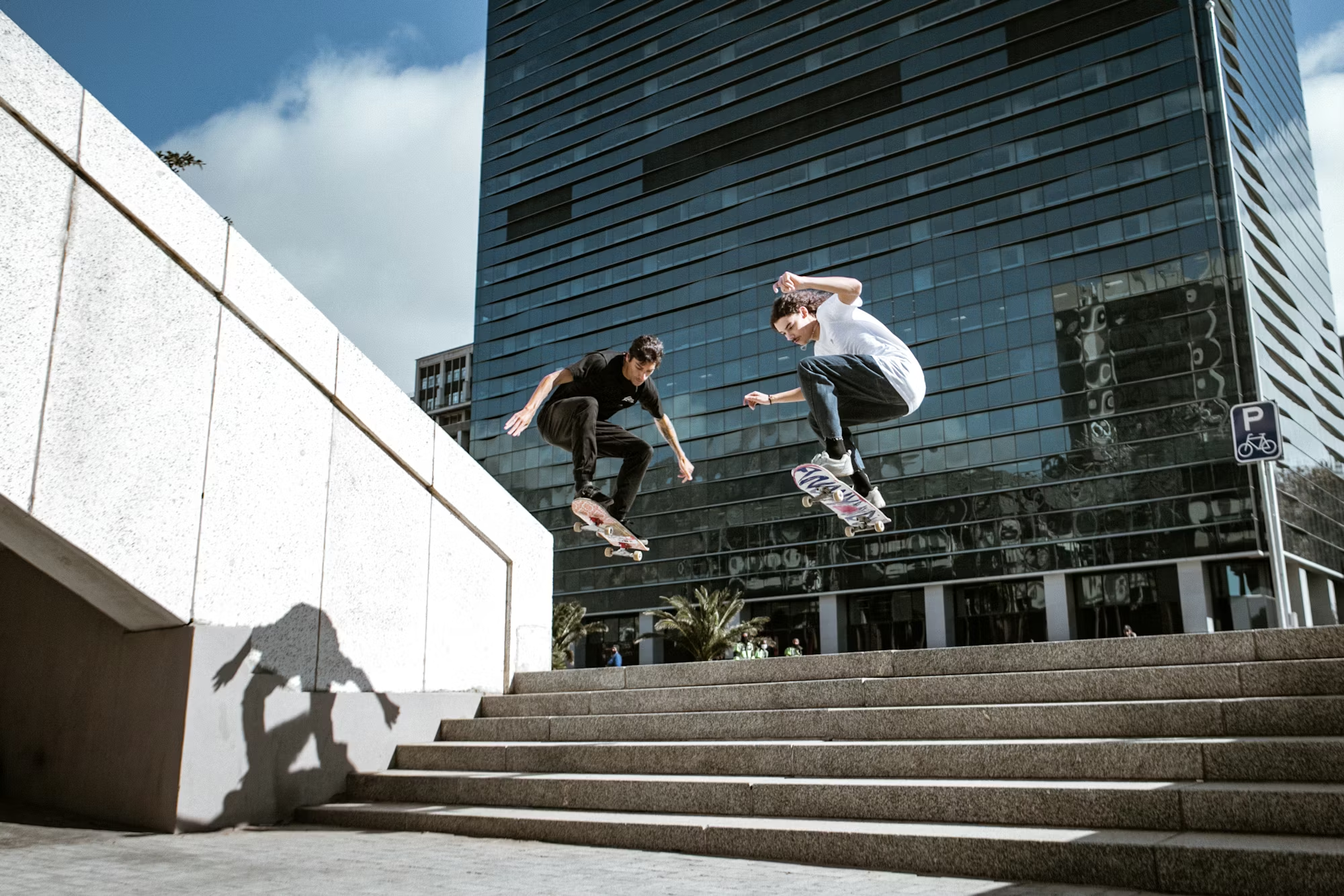
Street skateboarding is perhaps the most iconic representation of the sport. This discipline thrives in urban environments, where skaters utilize features such as stairs, curbs, ledges, and handrails as their playgrounds. Street skating emphasizes creativity, adaptability, and technical skill. Tricks like ollies, kickflips, and grinds are hallmarks of this style, showcasing a skater’s ability to manipulate their surroundings. The essence of street skating lies in its inherent challenge: transforming mundane urban structures into a canvas for artistic expression.

The practice of street skating encourages individuality, as each skater develops a personal style influenced by their environment. The spontaneity of this discipline fosters innovation, as skaters constantly seek new obstacles and lines to conquer. Many skaters spend countless hours honing their craft, capturing their unique perspectives through video and photography, contributing to a rich visual culture that inspires future generations.

In contrast, vert skateboarding focuses on performing tricks in halfpipes and ramps designed for aerial maneuvers. This discipline embodies the thrill of height and gravity, allowing skaters to launch themselves into the air and execute spins, flips, and grabs. The adrenaline rush associated with vert skating is unparalleled, and mastering this discipline requires not only technical skill but also a strong understanding of body mechanics and spatial awareness. Successful vert skaters learn to control their speed and trajectory, landing their tricks with precision and style.

Bowl and pool skating emerged from the DIY ethos of the skateboarding community, where skaters transformed empty swimming pools and concrete bowls into rideable structures. This discipline emphasizes flow and carving, allowing skaters to ride the smooth transitions of the bowl. Unlike street skating, which often features discrete tricks performed on obstacles, bowl skating emphasizes continuous movement and rhythm. The connection between the skater and the bowl creates a unique experience, where the skater navigates the curves and contours with grace, showcasing their fluidity and style.

Freestyle skateboarding offers a different perspective on the sport, focusing on flatland tricks and technical footwork. In this discipline, skaters perform intricate maneuvers on smooth surfaces, emphasizing balance, creativity, and control. Freestyle skating often resembles a dance, with skaters choreographing their movements to express their personalities. Each skater develops a unique set of tricks that reflect their style, showcasing the artistic aspect of skateboarding. This discipline, although less mainstream, highlights the importance of innovation and personal expression in the sport.

Longboarding has gained popularity among those seeking a more relaxed riding experience. Longboards are designed for stability and comfort, making them ideal for cruising and carving. This style emphasizes smooth turns and the enjoyment of long distances, often allowing riders to appreciate their surroundings. The art of carving involves making fluid, sweeping movements that enhance the connection between the skater and the environment. Longboarding promotes a sense of freedom, where riders can explore scenic routes and engage with nature while enjoying the thrill of riding.

Downhill longboarding takes the excitement up a notch, focusing on high-speed descents down steep hills. This discipline requires a deep understanding of control and technique, as skaters navigate tight turns and varying terrain at impressive speeds. Safety gear is essential in downhill riding, and skaters often cultivate a culture of respect and responsibility, emphasizing the importance of safe practices while pushing their limits. The exhilaration of downhill longboarding fosters camaraderie among riders, as they share tips and support each other in their quests for speed.

Slalom skateboarding introduces an element of precision and agility, where skaters navigate a course marked by cones or obstacles. This style emphasizes quick turns and maneuvering skills, showcasing the rider’s ability to maintain control in dynamic situations. Slalom skating has roots in surf culture, further connecting skateboarding to its origins and emphasizing the skill set shared by both sports. The competition aspect of slalom racing adds an exciting layer, encouraging skaters to improve their techniques and challenge themselves.

Park skateboarding takes advantage of features found in skateparks, such as ramps, rails, and bowls. Skateparks are designed to accommodate various styles of skating, offering a controlled environment where skaters can experiment and push their limits. The sense of community within skateparks fosters support and collaboration, with skaters often cheering each other on and sharing tips to improve their skills. The social aspect of park skating enhances the overall experience, creating bonds among riders as they navigate the features together.

Off-road and all-terrain skateboarding, often referred to as mountain boarding, presents a thrilling alternative to traditional skateboarding. Using specialized boards with larger tires, riders can tackle rough terrains, including dirt trails and grassy hills. This discipline emphasizes adaptability and resilience, as skaters must adjust their techniques to navigate diverse surfaces and conditions. Mountain boarding connects riders with nature, offering a unique experience that contrasts with the urban settings typically associated with skateboarding.

The rise of crossover styles, such as street/park fusion, showcases the dynamic nature of skateboarding. These styles blend techniques and tricks from different disciplines, allowing skaters to create unique combinations that reflect their personal flair. The ability to adapt and incorporate elements from various styles reflects the creativity that defines skateboarding culture, encouraging skaters to push the boundaries of what is possible and inspiring others to explore new avenues of expression.

Beyond the technical aspects of skating, the cultural significance of skateboarding cannot be overstated. The sport serves as a platform for self-expression, allowing individuals to showcase their personalities while connecting with others who share their passion. Skateboarding has a rich history rooted in counterculture, challenging societal norms and embracing individuality. This spirit of rebellion continues to resonate with new generations, inspiring them to carve their paths both on and off the board.

Skateboarding has also had a significant impact on various art forms, including music, fashion, and graphic design. The skate culture has produced iconic graphics and artwork that reflect the personality of the sport. Collaborations between skate brands and artists have resulted in limited-edition skateboard decks that merge art and sport, creating unique collectibles that resonate with both skaters and art enthusiasts. Music plays a vital role in skateboarding culture, with genres such as punk, hip-hop, and rock serving as the backdrop for skate videos and sessions. The connection between skateboarding and music reinforces the sense of community and shared experience among skaters.

As skateboarding continues to evolve, it remains a vibrant and dynamic sport that encourages creativity, resilience, and connection. Each style and technique offers unique challenges and rewards, allowing skaters to express themselves in diverse ways. The culture surrounding skateboarding fosters a sense of belonging, inspiring individuals to embrace their passions and pursue their dreams.

In conclusion, skateboarding is a multifaceted sport that encompasses a wide range of styles and techniques. From street and vert to longboarding and freestyle, each discipline showcases the creativity and skill of its practitioners. The cultural significance of skateboarding extends beyond the sport itself, influencing art, music, and youth culture in profound ways. As the skateboarding community continues to grow, it remains a powerful outlet for self-expression and a testament to the human spirit’s capacity for innovation and resilience.

Mastering the Waves: A Comprehensive Guide to Surfing Techniques

Mastering the Waves: A Comprehensive Guide to Surfing Techniques

Surfing is a thrilling water sport that has captivated millions around the globe. Beyond the sheer excitement of riding waves, surfing embodies a lifestyle that promotes harmony with nature and a sense of adventure. Whether you’re just starting out or looking to refine your skills, understanding the fundamental techniques and equipment is essential for a fulfilling surfing experience. In this article, we will explore various surfing techniques, the importance of proper equipment, and practical tips to help surfers of all levels excel on the waves.

Understanding the Basics of Surfing

Before diving into advanced techniques, it’s crucial to grasp the fundamentals of surfing. At its core, surfing involves riding waves using a surfboard, but several key concepts must be mastered to enhance your experience. The first step is learning how to paddle effectively, as this skill allows you to position yourself correctly in the water and catch waves efficiently. Proper paddling involves using a combination of arm strokes and body movements to create momentum, ensuring that you can reach the lineup—the area where waves break—quickly.

Choosing the Right Surfboard

Selecting the appropriate surfboard is vital for any surfer, as different boards cater to various skill levels and surfing styles. Beginners often benefit from using a longer, wider board, known as a soft-top or foam board, which provides greater stability and buoyancy. As surfers progress, they may transition to shorter boards that allow for increased maneuverability and advanced techniques. Understanding the differences between shortboards, longboards, fish boards, and funboards can significantly impact your surfing experience.

Essential Techniques for Beginners

For those new to surfing, several techniques can help build a strong foundation. First, mastering the pop-up technique is essential. This maneuver involves transitioning from lying on the board to standing upright as the wave approaches. To perform a pop-up, start by lying on your stomach with your hands placed near your chest. As the wave lifts your board, push up with your arms while simultaneously bringing your feet under you in a swift motion. Practicing this movement on land can help build muscle memory before attempting it in the water.

Once you’re comfortable with the pop-up, focus on your stance. A balanced and stable stance is key to maintaining control while riding the wave. Your feet should be shoulder-width apart, with your knees slightly bent to absorb any movements. Keep your arms extended for balance, and remember to look toward the direction you want to go. Maintaining a low center of gravity will help you stay stable and responsive to the wave’s movement.

Riding Different Types of Waves

Understanding how to ride different types of waves is crucial for advancing your skills. There are primarily two types of waves: beach breaks and point breaks. Beach breaks occur when waves break over a sandy bottom, while point breaks form when waves break over rocky points or reefs. Each type requires different approaches.

When riding beach breaks, surfers often need to adjust their positioning and timing to catch the wave as it forms. It’s essential to paddle hard to get in front of the wave and then execute your pop-up at the right moment. In contrast, point breaks allow for longer rides, as the wave can peel along the coast. Surfers should aim to maintain speed and stay in the pocket of the wave, which is the most powerful part, for the best experience.

Advanced Techniques for Experienced Surfers

Once you’ve mastered the basics, you can start exploring advanced techniques to enhance your surfing repertoire. One of the most sought-after skills is performing turns. A solid turn can help you navigate the wave effectively and maintain speed. To initiate a turn, shift your weight onto your back foot while looking in the direction you want to go. This movement allows you to pivot your board and carve into the wave.

Another exciting maneuver is the cutback, which involves turning back toward the breaking part of the wave after gaining speed. To perform a cutback, start by riding toward the shoulder of the wave, then shift your weight to your back foot and turn your shoulders back toward the wave, allowing your board to follow. Practicing this technique will not only improve your control but also allow you to connect with the wave more dynamically.

Safety Considerations in Surfing

While surfing can be exhilarating, it’s essential to prioritize safety. Understanding ocean conditions, such as currents, tides, and wave patterns, is crucial for avoiding dangerous situations. Always be aware of your surroundings and watch for other surfers and potential hazards. Wearing a leash attached to your board can prevent it from drifting away in case of a wipeout.

Additionally, consider using protective gear, such as rash guards or wetsuits, to shield your skin from the sun and prevent injuries while paddling. Staying hydrated and knowing your limits are equally important, as overexertion can lead to fatigue and reduce your ability to respond to changing conditions.

Surf Etiquette: Riding the Waves Responsibly

As with any sport, surfing comes with its own set of etiquette rules designed to promote respect and safety in the water. One of the fundamental principles is the priority rule, which states that the surfer closest to the breaking wave has the right of way. Observing this rule ensures a safer environment for everyone and reduces the risk of collisions.

It’s also important to communicate with other surfers. If you’re paddling for a wave and see someone else in position, it’s courteous to back off. Respecting others and their space fosters a positive surfing community and encourages camaraderie among surfers.

The Joy of Surfing: Building Community

Beyond the techniques and skills, surfing is about building connections—both with the ocean and with fellow surfers. Many surfers find a sense of belonging in the surfing community, sharing experiences, tips, and stories. Local surf shops, classes, and competitions often serve as gathering places where surfers can bond over their passion for the sport.

Participating in group surf sessions or joining surf clubs can enhance your skills while creating lasting friendships. The shared joy of catching waves and overcoming challenges fosters a unique camaraderie that transcends age and background.

Conclusion: Embrace the Journey

Surfing is a journey of continuous learning and personal growth. Whether you’re riding your first wave or perfecting complex maneuvers, each experience contributes to your development as a surfer. By mastering techniques, respecting the ocean, and embracing the community, you can fully immerse yourself in the exhilarating world of surfing. So grab your board, hit the waves, and enjoy the ride—each wave is a new adventure waiting to unfold.